

We use cookies to improve your online experiences. To learn more and choose your cookies options, please refer to our cookie policy.

17 September, 2026
The Power of a Vision | The Transformation of TSK
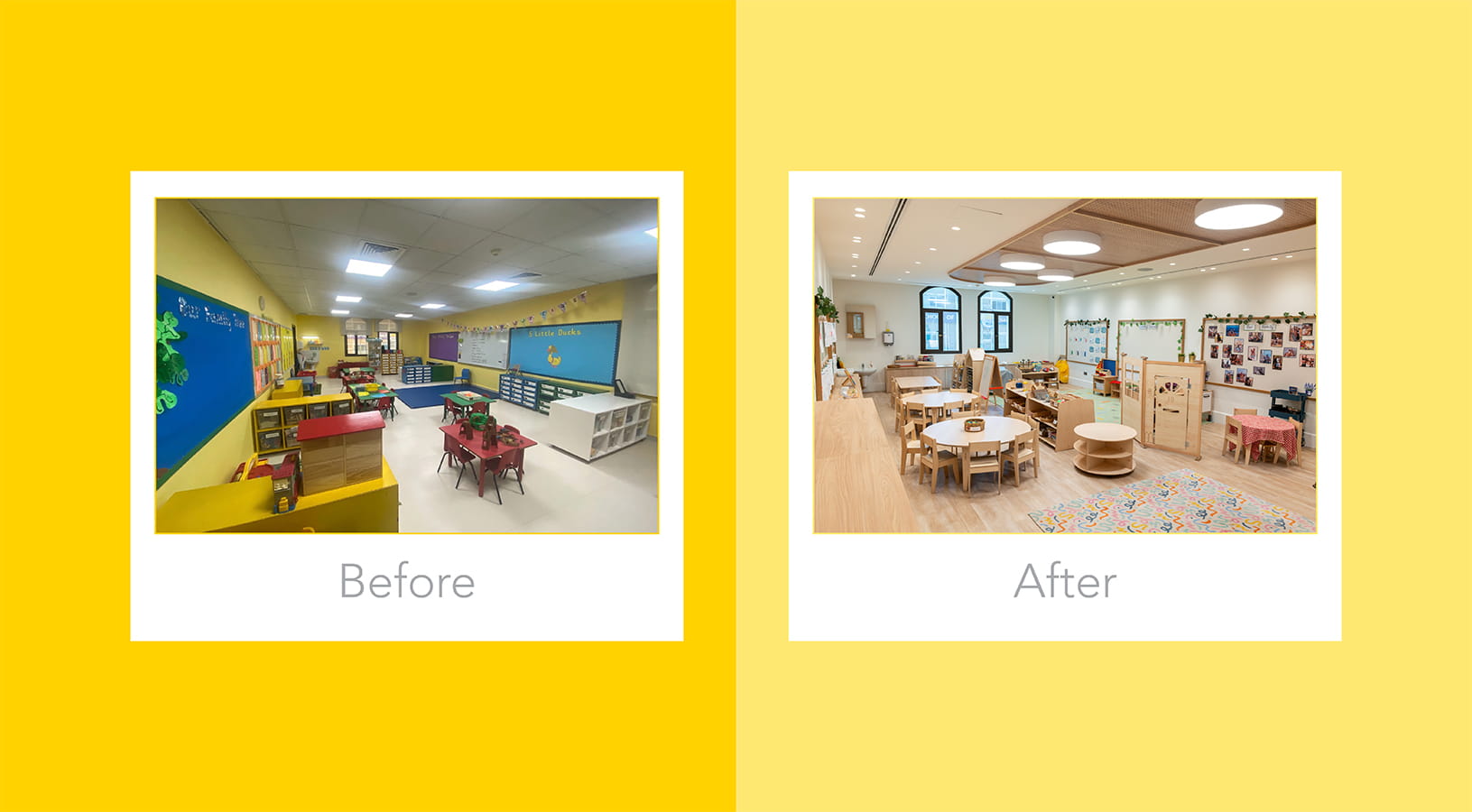
When I look at the two photographs above side by side, it’s hard to believe that this is the same classroom, in the same school, five years apart.
Of course, the physical transformation is striking, but for me, these photographs represent something more powerful than new furniture, resources or a perfectly prepared classroom. They represent what can happen when a team shares a vision for what early years education can be and commits to it over time.
Back in 2021, TSK had something incredibly important. We had people who cared deeply about the school and its children. In my first year as Head Teacher, I remember being struck by the resilience, commitment and experience within the team. There was so much potential to build on.
The vision back then was actually quite simple. We wanted to create the kind of early years setting that we would choose for our own children. Not just when compared with other nurseries in Kuwait, but against the very best globally. A place that felt warm and welcoming, and like ‘home-away-from-home’ for every child who stepped through our doors.
We wanted our classrooms to feel less like classrooms in the traditional sense and more like workshops: spaces where children could walk through the door and immediately find something to investigate, build, create, talk about or become absorbed in. And once we started asking ourselves what that could look like, one change inevitably led to another.
Research increasingly demonstrates the importance of the environment itself in the early years and studies have linked the quality and organisation of early childhood spaces with children’s social and emotional development. The research is clear. High levels of noise, disorder and overstimulation can be associated with poorer social outcomes. This sits alongside established attachment research showing the importance of warm, responsive relationships and a secure base from which young children can confidently explore.
Creating calm, welcoming and home-like spaces is therefore not simply an aesthetic choice. It is part of creating an environment in which children can feel secure, develop a sense of belonging and become confident and independent learners.
And so the environment changed, but so did our curriculum. Our approach to planning became increasingly responsive to the children in front of us. We invested heavily in professional learning, particularly around the quality of adult-child interactions. We talked a lot about the difference between interacting and interfering: knowing when an adult can take children's thinking further, but also recognising when the most powerful thing we can do is step back.
Our expectations grew too. Of our environments. Of our practice. Of the experiences we wanted children to have every day. And, as the school evolved, the expectations of our families grew alongside us.
Perhaps my favourite part of the transformation, though, is something these photographs can't show.
It is the feeling in the building.
I remember the beginning of the academic year in 2021 feeling very different. Starting school is an enormous transition for very young children, and understandably there were lots of tears. Over time, we have thought carefully about that experience too. Today, through approaches such as our staggered start and carefully planned settling process, the beginning of the year feels incredibly calm.
More importantly, when children enter their classrooms, they know that these spaces belong to them. They don't need to wait for an adult to direct their learning. They get stuck in. They explore. They make choices. They talk. And our adults are alongside them, co-playing, wondering and extending their thinking.
None of that happened because we bought new furniture.
It has taken five years of investment, training, reflection, challenge and an enormous amount of work from a team willing to continually develop their practice. We have been fortunate to have Directors and Senior Leadership that believed in the vision, believed in the importance of the early years, and were prepared to invest heavily in school improvement. And we have had practitioners who were prepared not just to work in new environments, but to continually ask what excellent practice within those environments should look like.
There have certainly been moments when it has felt difficult. Every summer brings tight timelines, and children don't wait for us to feel ready! September arrives, the doors open and eager faces arrive ready to begin their new chapter. Perhaps that has been one of the greatest and most challenging lessons of the journey.
A vision isn't something you write once and put on a wall and it’s not a one-off refurbishment with a completion date.
It is something you come back to, day after day and year after year. It is hundreds of small decisions, conversations and moments of reflection. It is being willing to raise the standard and then, once you reach it, asking what comes next.
Five years separate these photographs.
I'm incredibly proud of how different they look. But I'm far prouder of everything that happened between.
Hannah Farrell
Head Teacher
The Sunshine Kindergarten

